
Survivors' Voices: Healing, Part 2
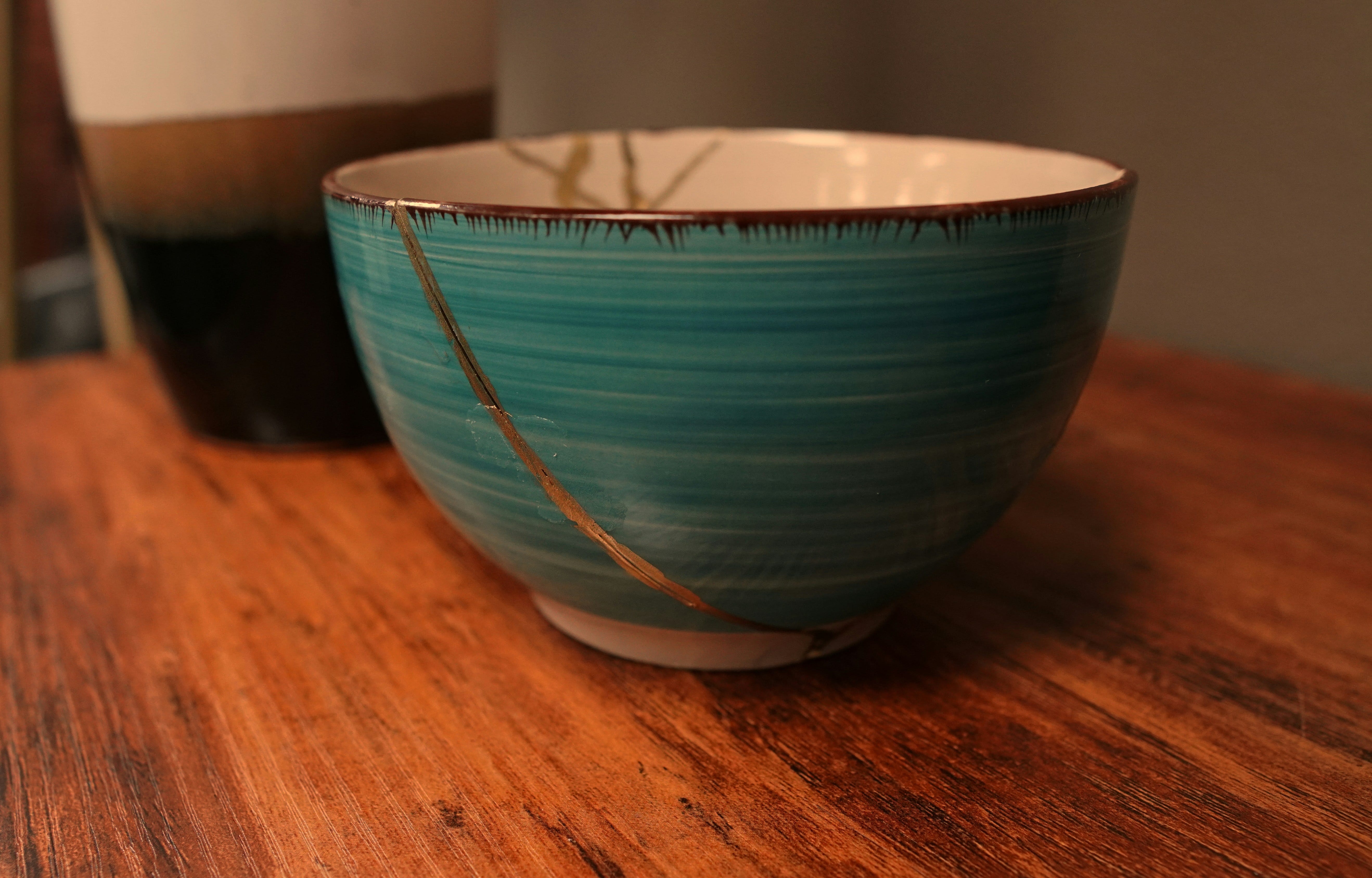
One of the things I appreciate most about the ISAT Survivors’ Voices panelists is their thought-provoking honesty about words and ideas that are often discussed only at a surface level. The reflections for this month are prime example of that, and I’m honored to share them with you today.
(If you missed the first installment on this topic, you can find it here: Survivors' Voices: Healing, Part 1.)
I used to have this idea of healing that I would look and act like someone who had not been through trauma. Someone who made friends easily, who was easily lovable, who had a fit body, who didn’t struggle with depression or anxiety, who didn’t self-harm. I wanted to be someone who wasn’t me. I wanted to be a person who had never experienced sexual trauma, whose innocence was not stripped away at such a young age. As the years went on, I realized that person was never going to exist. I had to grieve that reality. Slowly, my idea of healing has evolved. I now strive to slowly improve my life and to be a better wife, mother, and friend. I work on what it means to have boundaries and self-care. I try to practice being a loving presences to others and also to myself. I doubt I will ever be completely free of these wounds, but my life can still be good.
Healing has been an important concept for me as a survivor, a critical goalpost that anchors my journey. I remember how hopeful it seemed when I learned the concept of post-traumatic resilience–here was something I could aim for, the idea that as a survivor I might even one day have a kind of deep resilience despite the trauma. I can see evidence of a growing resilience, which I notice both in my internal reactions to daily events, and in how I can be present for others who are facing trauma. Part of healing, though, has been to filter a lot of noise – others’ ideas about healing and forgiveness, how I should feel, and whether or when I would be “back to normal” (which they believe includes returning to a naive state of belief in authority and piety in the church). This constant filtering means it takes me a lot of extra, invisible time and energy to figure out what’s really true, and what I want and need in a given moment and season.
Healing has been an interesting journey. The most unexpected part of it is realizing that things I was struggling with and thought were unrelated to the abuse suddenly improved immensely once I started facing the abuse and working through it. So much of ourselves is intertwined.
It’s been frustrating that I don’t feel like my particular wound is one I can share in most popular avenues for healing in the Church. I’ll hear about a healing retreat, even one centered on healing from sexual wounds, and have the distinct feeling that such things aren’t going to bear fruit for me - I’d cause scandal to fellow retreatants or have the retreat director or priest on staff freaked out by what I’m carrying and they wouldn’t be able to help. Or else I’ll attract another predator or someone well meaning but inept and get hurt again. Awake’s offerings on this front have been wonderful, but I still wish I didn’t feel like an outcast from the “normal” avenues for these things.
I have been thinking about what my life feels like now. It is the sense of going through the motions and actions of the Church, feeling like a pin ball in a Church pin ball machine. Fearful of what “lever” I’m going to get “whacked” by today. What priest is going to realize I’m a survivor and be too “uncomfortable” to have me participate in anything. What Catholic employer is concerned, “What if a bishop realizes we have an survivor working here?” And I miss out on work/opportunities or lose a job I’ve been competently doing without issue. Healing would the chance for me to finally be not fearful. To be seen, heard, and supported. The abuse and resulting trauma isn’t my identity. Beloved child of God is my identity. Healing is when the Church sees and acts on my true identity, not my history of my lived experience.
There’s no “healed.” This trauma will be with me for the rest of my life. The grooming took places over years, the abuse over minutes/hours, and now decades lie ahead, maybe as many as six or seven of them, where I have to learn how to live with the impact of the abuse on my body and soul. On one hand, it’s terrifying to acknowledge that this journey will never be in the past tense, only ever present and ongoing. On the other hand, once I acknowledge that this journey is never-ending, I can release myself from the burden of not being at some unattainable finish line.
We call it closure, but what we really crave is a physiological exhale.
The body wants proof the danger has passed.
I’m really torn about “healing” as a concept, at least as it pertains to what happened to me. I was abused in the context of a very vulnerable and profound gift of self to Jesus. That gift matters deeply to me and is sometimes the only thing I can hold onto as proof when I feel like I don’t really love Jesus anymore. Any other gifts of self I’ve given seem to pale in comparison. But being abused in that context also shattered everything about my identity, my spirituality, my relationships with God and others. If “healing” means moving on and not being affected by what happened anymore, then I’m not sure I want—nor will ever really achieve—healing. To move on and no longer be affected would then seem to minimize or erase the gift I gave and I simply can’t do that—it *has* to have meant something, it *has* to have been real and important and even sacrificial in some way. Otherwise I have nothing left to hold onto.
I know I will be healed when I can embrace this cross, as Christ embraced His, and raise my head, look to the Father and say with Jesus: “Forgive them, Father, they know not what they do.” I know I will never reach this without the Sacraments of confession and communion. I turn to Our Lady of Sorrows in prayer to guide me to this healing.
Healing is acknowledging and receiving acknowledgement as to how I was hurt, and the hurt and damage done both to me and to others with whom my life was closely connected. It is being allowed to stay in my grief and anger as long as I need to, so that I can work through the issues for myself, in my own time. I started by naming my pain, then praying for the person who hurt me. Healing is like learning to walk with a leg amputated. Pain takes time to heal. The sense of loss remains. Even with the healing process, the damage is there, and the work in learning to walk again with one leg is hard work. I have had to reconsider all that I once held as true, as certain words have lost their meaning. I needed to learn to speak my truth. After suffering all these years, I started questioning my assumptions and the values and principles I uphold, while holding onto the ethical questions to find my own healing. My anger helps me to refuse to accept what was unacceptable, grieve my losses, and voice my pain. Thank you for this healing space, Sara.
If you’re interested in an in-depth exploration of three more survivors’ perspectives on healing, check out this summary and recording of Awake’s recent online event: Listening to Survivors: What Has Helped My Healing Journey.
Peace,
Sara